
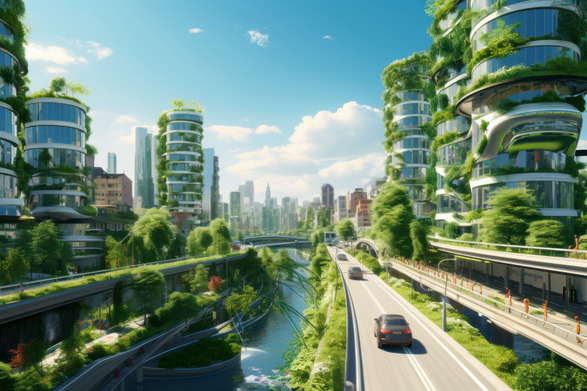
Net-positive buildings represent a revolutionary step forward in
sustainable design, aiming to generate more energy than they consume.
Unlike net-zero buildings, which simply balance energy consumption,
net-positive structures produce an excess that can be returned to the grid
or repurposed for other uses. By integrating renewable energy systems and
employing passive design techniques, these buildings significantly reduce
their environmental footprint.
Incorporating traditional architectural practices, such as
climate-responsive design and the use of locally sourced materials,
further enhances energy efficiency and sustainability. Strategic elements
like optimal building orientation, effective insulation, and
cross-ventilation reduce reliance on energy-intensive systems.
Additionally, the use of efficient water fixtures and equipment helps
achieve water neutrality or even a positive water balance, while mindful
waste management practices further minimize environmental impact.
The construction industry is increasingly focused on mitigating its
environmental impact by adopting sustainable building materials that
repurpose existing resources and minimize waste. Innovative materials,
such as cardboard or chipboard panels, are designed to reduce carbon
footprints by reusing materials rather than producing new ones. Sourcing
materials within a 300-kilometer radius of the construction site fosters
architecture that resonates with the local context and community. To drive
meaningful change, innovation should be focused on optimizing available
resources.
Materials like Aerocon panels and sandwich panels, composed of two
lightweight fiber-reinforced cement sheets with a tongue-and-groove joint
system, allow for rapid on-site assembly, thereby reducing construction
time.
As India moves towards a future characterized by rapid urbanization, a
growing population, and increasing environmental awareness, its built
environment is poised for a transformative shift. Once considered niche,
green buildings are now becoming a driving force for sustainable
development in the country, offering hope for a greener future. Indian
regulatory frameworks such as the Energy Conservation Building Code (ECBC)
and GRIHA are promoting sustainability, while technological
advancements—from passive design strategies to smart technologies—are
enabling more efficient resource use.
Green buildings, with their long-term benefits, are not only
environmentally responsible but also economically viable, offering returns
that far exceed their initial costs.
For students aspiring to excel in this evolving field, staying updated on
these advancements is crucial. In Mumbai, where numerous architecture
institutes and
Interior design Institutes
are available,
Thakur School of Architecture and Planning (TSAP)
stands out as a premier choice.
Recognized among the
Best Architecture Colleges in Mumbai
, TSAP offers a comprehensive curriculum, experienced faculty, and
state-of-the-art facilities. The institute’s Bachelor of Vocation (B.Voc)
degree in Interior Design, affiliated with the University of Mumbai,
emphasizes creativity, innovation, and practical problem-solving.
With UGC-approved programs and a commitment to excellence, TSAP ensures
its students are well-prepared for the challenges of modern architecture
and design. Whether you’re interested in B.Arch colleges in Mumbai or
specialized interior design programs, TSAP provides a solid foundation for
a successful career in sustainable architecture.
Recent Posts
-
Embracing Net-Positive Buildings: The Future of Sustainable Architecture
13 Aug 2024
-
Reducing Carbon Footprint in Home Interiors: Sustainable Design Tips
16 Jul 2024
-

AI and its Potential Impact on the Field of Architecture in 2024
08 Jul 2024
-
From Inspiration to Reality: the Journey of an Interior Designer
30 Jun 2024
-
Why TSAP Is Considered as One of the Best Architecture College in Mumbai
26 Jun 2024